
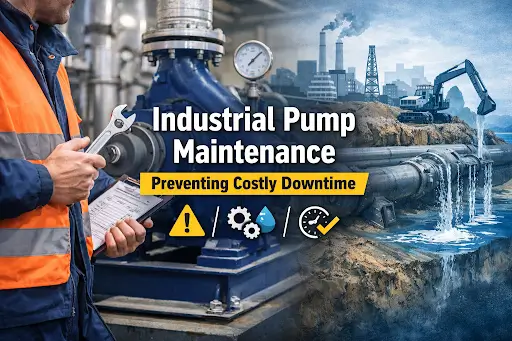
Industrial pumps are essential for many sectors including construction, oil and gas, water management, and dewatering operations. These pumps often operate continuously under demanding conditions, making them vulnerable to wear and mechanical failures if not maintained properly.
Regular industrial pump maintenance plays a crucial role in preventing unexpected breakdowns, reducing operational costs, and ensuring consistent performance. For industries relying on pumping systems, even a short period of downtime can result in significant financial losses and project delays.
This article explains why pump maintenance is important, common causes of pump failure, and best practices to keep pumping systems operating efficiently.
Industrial pumps work under high pressure and heavy workloads. Without proper maintenance, small mechanical issues can quickly turn into major system failures.
Regular maintenance helps businesses:
Companies that implement a preventive maintenance plan often experience fewer operational interruptions and improved productivity.
Understanding the common reasons behind pump failure helps technicians detect problems early and avoid major repairs.
Mechanical seals prevent fluid from leaking out of the pump housing. Over time, seals may wear out due to high pressure, temperature variations, or contamination. Damaged seals can cause leakage and reduce pump efficiency.
Bearings support the rotating shaft of the pump. Poor lubrication or contamination can lead to bearing damage, which may cause vibrations, overheating, and eventually pump failure.
Cavitation occurs when vapor bubbles form in the liquid due to pressure changes and collapse inside the pump. This process can damage internal components and significantly affect pump performance.
Improper alignment between the pump and motor can create excessive vibration and stress on internal components, leading to premature wear and reduced efficiency.
Early detection of pump issues can prevent costly downtime and major equipment damage.
Some common warning signs include:
When these signs appear, immediate inspection is recommended to prevent further damage.
Implementing a structured maintenance strategy ensures pumps remain reliable and efficient throughout their operational life.
Routine inspections help identify worn components, leaks, or alignment issues before they develop into major failures.
Tracking key performance indicators such as pressure, temperature, and flow rate can help detect operational problems early.
Proper lubrication of bearings and moving parts reduces friction and prevents excessive wear.
Preventive servicing by trained technicians ensures all pump components are inspected, cleaned, and repaired when necessary.
Companies that rely heavily on pumping systems often partner with experienced service providers like Esperanto KSA to ensure their equipment remains reliable and efficient.
Preventive maintenance offers several long-term advantages for businesses and industrial operations.
Key benefits include:
By addressing small issues early, companies can avoid costly equipment replacement and operational disruptions.
How often should industrial pumps be serviced?
Most industrial pumps should be inspected regularly and serviced according to manufacturer recommendations. In high-demand environments, more frequent maintenance may be required.
What is the most common cause of pump failure?
Seal damage, bearing wear, and cavitation are among the most common causes of industrial pump failure.
Can poor maintenance affect pump efficiency?
Yes. Poor maintenance can cause friction, leakage, and mechanical damage, which significantly reduces pump efficiency and increases energy consumption.
Industrial pumps are critical for maintaining smooth operations in many industries. Without proper maintenance, even minor issues can lead to costly downtime, equipment damage, and project delays.
Implementing a preventive maintenance program that includes regular inspections, performance monitoring, and scheduled servicing can significantly improve pump reliability and operational efficiency.
Businesses that invest in professional pump servicing can ensure their pumping systems remain dependable, efficient, and capable of supporting demanding industrial operations.

Lorem ipsum dolor sit amet, consectetur adipiscing elit. Ut elit tellus, luctus nec ullamcorper mattis, pulvinar dapibus leo.